JUWEYRIA Women Relief Participated in Discussion Meeting on Women’s Access to Justice in Somalia’s Plural Legal Justice System
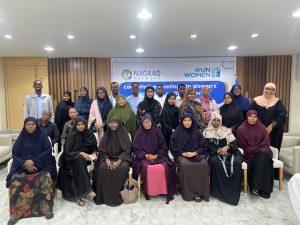
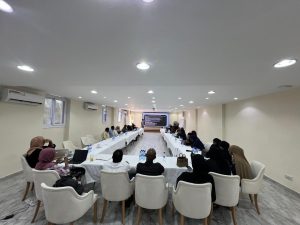
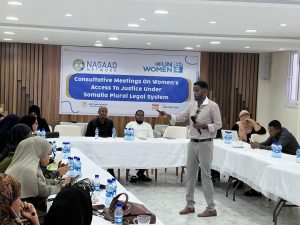
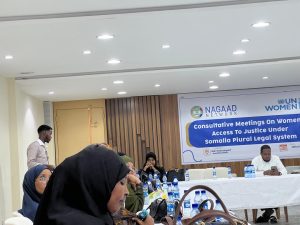
JUWEYRIA Women Relief (JWR) participated in an important discussion meeting on Women’s Access to Justice in Somalia’s Plural Legal Justice System, organized by NAGAAD Network and UN Women at NAC Hotel.
The Executive Director Hawo Muse and the Coordinator Sharmaarke Hassan attended the meeting alongside representatives from civil society organizations, legal practitioners, lawyers, religious scholars, traditional elders, women’s rights organizations, humanitarian actors, development partners, and other justice sector stakeholders. The meeting served as a platform for exchanging knowledge, sharing experiences, and identifying practical approaches to improving women’s access to justice across Somalia.
Understanding Somalia’s Plural Legal Justice System
The discussion provided participants with a comprehensive understanding of how Somalia’s plural legal system functions and the relationship between its different justice mechanisms. Particular attention was given to the opportunities and challenges women face when seeking justice through these systems.
The meeting covered the following key areas:
- Statutory Law – The formal legal system established through the Constitution, national legislation, courts, and government institutions.
- Customary Law (Xeer) – The traditional justice system in which community elders resolve disputes according to customary practices and agreements.
- Islamic Law (Sharia) – The application of Islamic legal principles in matters relating to family, civil, and other legal issues.
- Alternative Dispute Resolution (ADR) – Community-based mediation and reconciliation mechanisms that help resolve disputes peacefully outside the formal court system.
- Women’s Access to Justice – Examining barriers that prevent women and girls from accessing justice and identifying ways to strengthen legal protection and equal access.
- Gender-Based Violence (GBV) – Improving survivor-centered responses, referral pathways, and coordination among justice and protection actors.
- The Role of Civil Society – Enhancing legal awareness, advocacy, community engagement, and support services that promote women’s rights and access to justice.
Key Outcomes and Recommendations
The meeting generated practical recommendations aimed at improving women’s access to justice through inclusive and community-driven approaches. Participants emphasized that strengthening community participation and collaboration is essential for creating a more accessible and responsive justice system.
The key recommendations included:
- Establishing community forums and dialogue platforms where women can openly discuss justice-related concerns and engage with legal, religious, and community leaders.
- Promoting non-formal decision-making mechanisms that encourage the meaningful participation of women in community discussions and local conflict resolution processes.
- Supporting youth-led advocacy initiatives that raise awareness of legal rights, gender equality, and women’s access to justice while encouraging young people to become advocates for positive social change.
- Strengthening collaboration between civil society organizations, traditional elders, religious scholars, and formal justice institutions to improve legal referrals and support services.
- Expanding public awareness of Somalia’s plural legal system so that women and communities better understand the justice options available to them.
- Encouraging inclusive participation in community leadership and decision-making structures to ensure women’s voices contribute to local governance and peacebuilding efforts.
JUWEYRIA Women Relief’s Commitment
JUWEYRIA Women Relief recognizes that equitable access to justice is fundamental to protecting women’s rights, promoting gender equality, and strengthening resilient communities. The organization remains committed to supporting initiatives that enhance legal awareness, empower women and girls, prevent gender-based violence, and promote inclusive community participation.
The knowledge and recommendations gained from this discussion meeting will contribute to JWR’s ongoing protection, advocacy, and community engagement programmes. The organization looks forward to working collaboratively with partners and stakeholders to advance practical solutions that improve access to justice for women across Somalia.
JUWEYRIA Women Relief extends its sincere appreciation to NAGAAD Network and UN Women for organizing this valuable discussion meeting and for creating an inclusive platform that brought together justice actors, civil society organizations, and community representatives to exchange ideas and strengthen collective efforts toward improving women’s access to justice in Somalia.